A training event is judged on one artefact: the certificate. If it can be obtained by registering and never arriving, it is worth what it costs to register, and everybody involved works that out within about two cohorts.
The thing that makes a certificate credible is not its design. It is whether the system issuing it knows who was in the room, session by session.
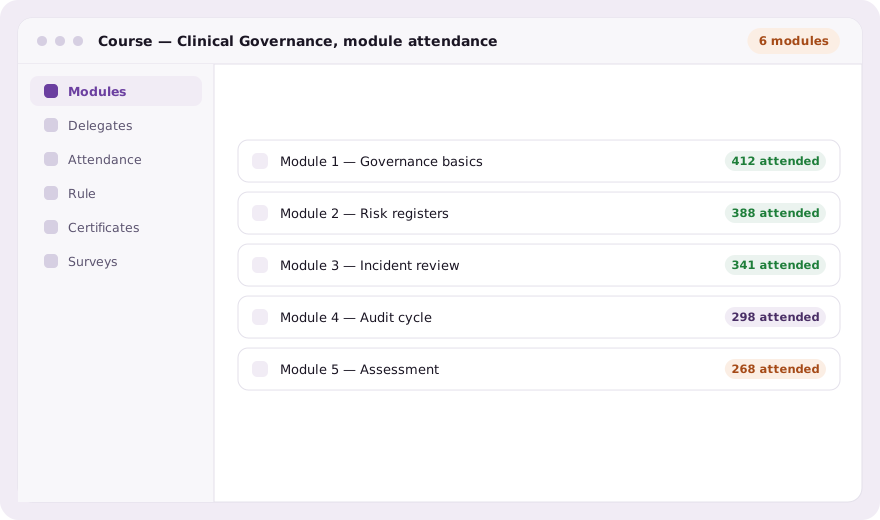
Attendance, per session
Delegates are scanned into each session as well as through the door, from the same check-in that runs on any phone in the browser. There is no separate attendance sheet circulating a room, no signature list to type up, and no gap between the register and the record.
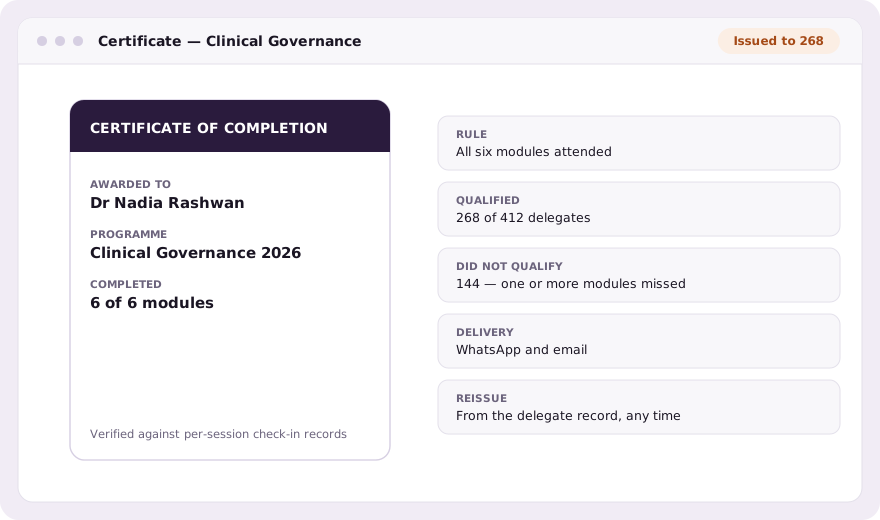
You set what qualifies
All modules, a minimum number, or a named set. The certificate issues to the delegates who meet the rule and not to the ones who do not, and the list of people who fell short is itself useful. Those are the delegates who need one more module, and the ones worth contacting about the next cohort.
The things a training programme also needs
- Module capacity, so a practical session stops accepting sign-ups when full
- Delegate agendas, so people know which room they are in next
- Post-course surveys aimed only at the delegates who attended
- Arabic and English certificates with correct direction, face and numerals
- Reissue from the delegate record when a certificate is lost
Cohorts, and the people who come back
Because a delegate record persists across the events in your tenant, the second cohort starts from a real audience: who completed, who fell one module short, who registered and never arrived. A campaign to the 144 who did not qualify is the highest-converting message a training provider will send all year.
Accreditation asks how you know
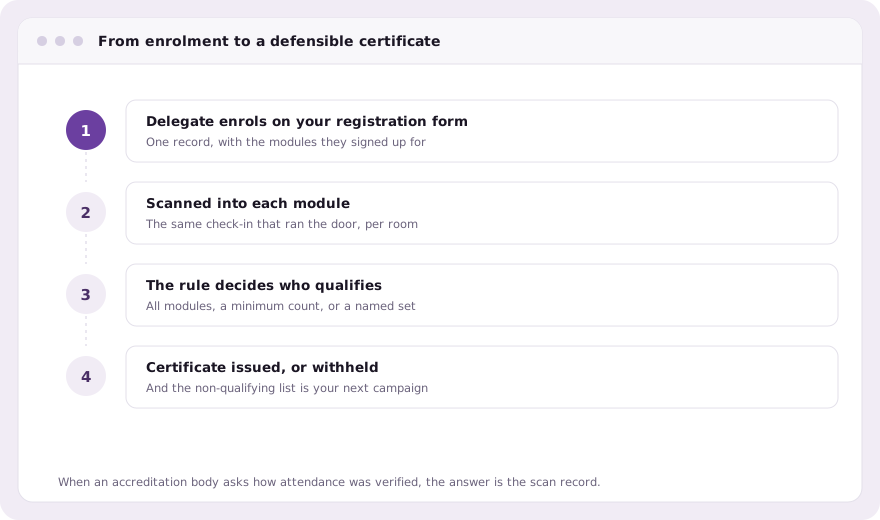
The question that arrives from a professional body is never about the certificate design. It is how attendance was verified, by whom, and whether the record can be produced. A scan log tied to each delegate and each module is an answer; a signature sheet photographed on somebody’s phone is not.
Because attendance, enrolment and the certificate all read the same records, producing that evidence is an export rather than a reconstruction, including for a cohort that ran eighteen months ago and whose administrator has since left.
Common questions
How does evenclo verify attendance for a certificate?
From per-session check-in records: the same scans that ran the door and each room. There is no separate attendance sheet to reconcile.
Can I set my own rule for who earns a certificate?
Yes: all sessions, a minimum number, or a named set. Delegates who do not meet it are not issued a certificate, and they form a list of their own.
Can certificates be issued in Arabic?
Yes, with the correct direction, typeface and numerals rather than an Arabic name placed into a Latin layout.
Book a demo Thirty minutes, screen shared, in Arabic or English.