A certificate everyone receives is a receipt. A certificate somebody can fail to qualify for is a credential, and the difference is entirely in whether the issuing system knows who was in the room.
That is the only reason evenclo records attendance per session rather than per event. Everything else the programme feature does is downstream of being able to gate this honestly.
Gated on attendance, not on registration
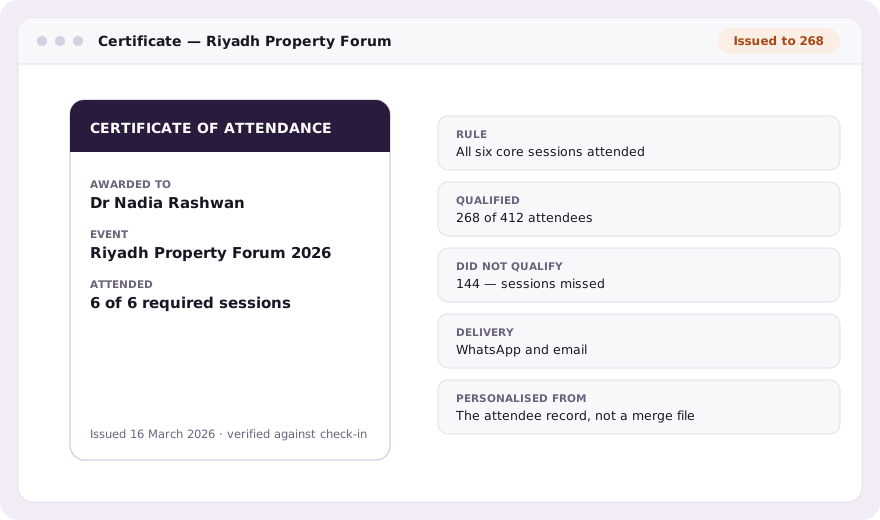
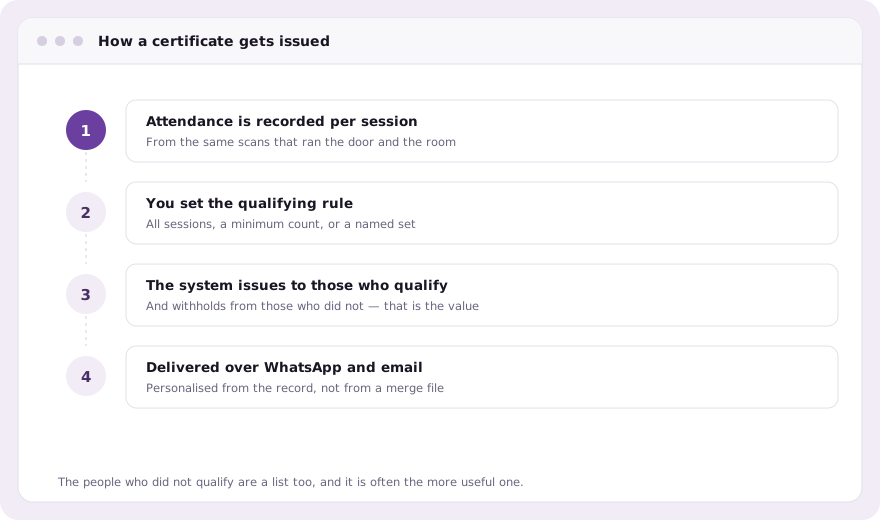
You set the rule: attended the whole programme, attended a minimum number of sessions, attended these specific ones, and the certificate issues to the people who meet it and not to the people who do not. Nobody works through a spreadsheet cross-referencing a scan log by hand.
Designed once, personalised per person
The certificate is a template with merge fields reading the attendee record: their name as they gave it, the sessions they attended, the date they qualified. Arabic certificates carry the right direction, typeface and numerals rather than an Arabic name dropped into a Latin layout.
Delivered where it will be seen
Certificates go out over WhatsApp and email through the same dispatcher as everything else, so delivery is not a separate export-and-attach exercise for whoever is left in the office the following week.
Useful beyond the certificate itself
- A defensible answer when an accreditation body asks how attendance was verified
- The non-qualifying list, for the people who need one more session
- Reissue from the attendee record when a certificate is lost
- Arabic and English certificates from the same template set
- The date and rule recorded against the issue, and not the file alone
The list of people who did not qualify
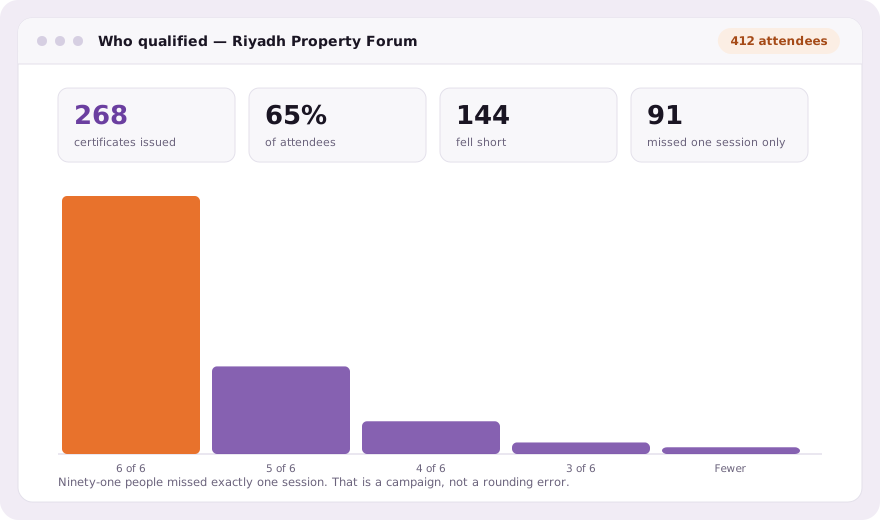
It is the more useful of the two lists and almost nobody keeps it. These are people who registered, travelled, attended most of a programme and fell short by one session, which makes them the warmest audience for the next cohort you will ever assemble, and the only group who can be offered something specific rather than a general invitation.
Arabic certificates that are actually Arabic
A certificate is a document somebody frames, and an Arabic name dropped into a layout built for Latin text is immediately recognisable as an afterthought. Direction, typeface and numerals are properties of the template, so an Arabic certificate is laid out in Arabic rather than mirrored badly at the last moment. Both language versions come from the same template set, so neither is the one that quietly stops being maintained.
Training and certification events live or die on this. If a certificate can be obtained by registering and never arriving, it is worth what it costs to register.
Common questions
Can certificates be gated on attendance?
Yes. You set the rule (all sessions, a minimum number, or a named set) and certificates issue only to attendees who meet it.
How is attendance verified?
From per-session check-in records, the same scans that ran the door and the rooms. There is no separate attendance sheet to reconcile.
Are Arabic certificates supported?
Yes, with the correct direction, typeface and numerals, not an Arabic name placed into a Latin layout.
Book a demo Thirty minutes, screen shared, in Arabic or English.