The distance between "someone registered" and "the sales team knows" is usually a person exporting a file at the end of the day. A webhook closes it to about a second.
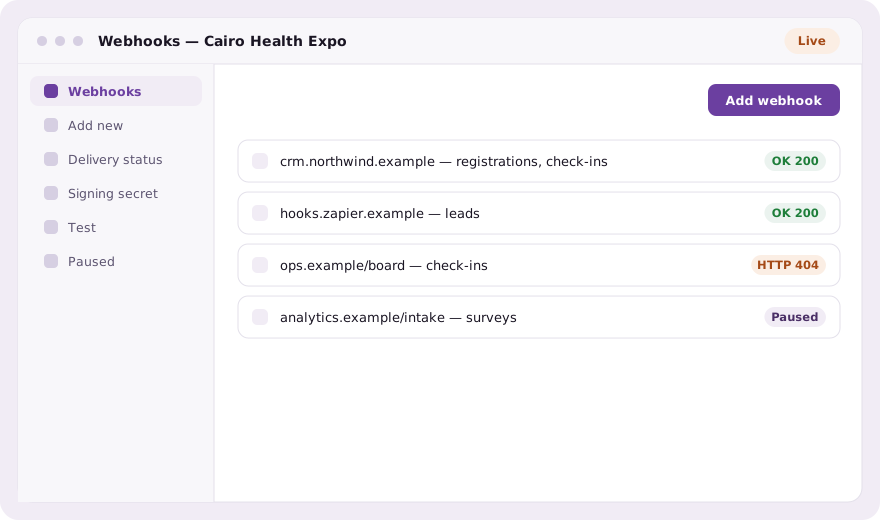
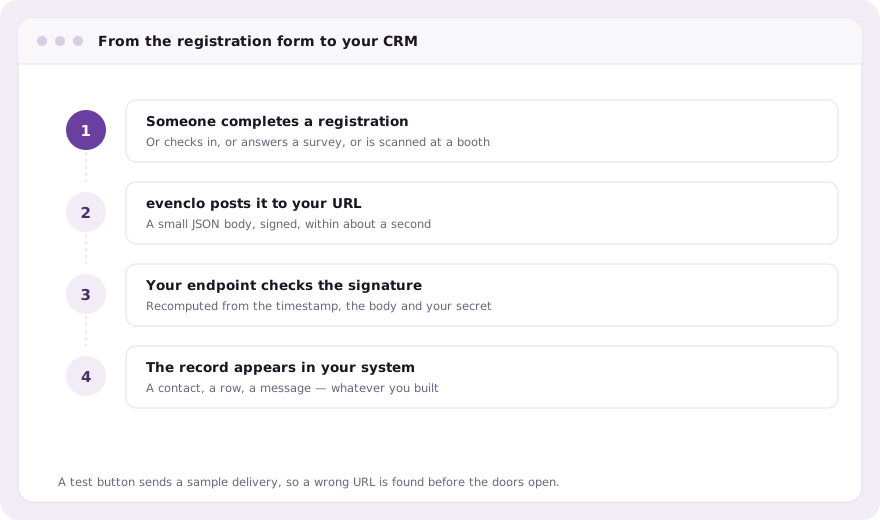
You give evenclo a URL you control. Each time something happens at your event we post it there, to your CRM, to a dashboard your team already watches, or to Zapier or Make if nobody wants to write code for this.
Four things worth knowing about immediately
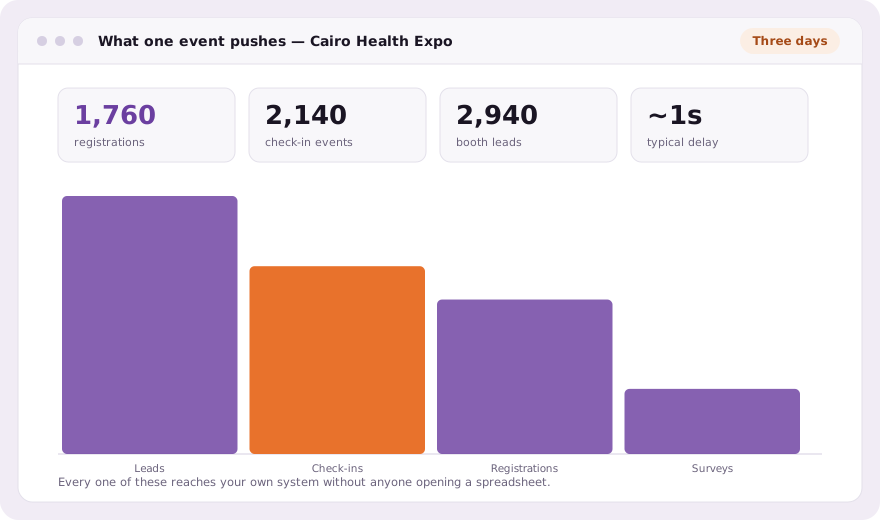
- A registration completes. A paid ticket fires once the payment settles, never before
- Someone checks in at the door, including a scan taken while the device was offline
- An exhibitor captures a lead at their booth
- A survey or a live poll is answered
One hook instead of a connector for every system
The usual answer to the integration question is a page of logos, and the one system you actually use is never on it. A generic webhook is the opposite bet: HubSpot, Salesforce, Zapier, Make and anything your own team writes all accept an HTTP POST, so one feature covers them without us holding anyone’s credentials or maintaining a connector that breaks when a vendor changes an endpoint.
Signed, so your endpoint knows it is us
Every delivery carries a signature: an HMAC of the timestamp and the exact body, keyed with a secret shown to you once when you create the webhook. Your endpoint recomputes it and rejects anything that does not match, which is what stops a URL that leaked into a log from becoming an open door into your CRM. The timestamp is inside the signed value, so a delivery captured today cannot be replayed at you next week.
What it is not
It is a live feed, not the system of record. Nothing is retried: if your endpoint is down for ten minutes those deliveries are gone rather than queued. That is a deliberate choice, stated plainly rather than discovered later: the attendee list, the exports and the reports stay complete either way, and a nightly export is still the right way to reconcile.
Bulk imports do not fire either. Uploading five hundred attendees would post five hundred messages at your CRM inside a few seconds, which most of them treat as an attack rather than as data.
Where the exhibitors fit
Exhibitors can point their own leads at their own CRM from the booth, separately, and see nothing but their own. The organiser’s webhook still receives every booth’s leads. Two audiences, one event, and neither has to ask the other for a file.
The full payload for each topic, and the few lines needed to verify a signature, are in the help centre. Send that link to whoever is building the receiving end and the rest is their afternoon rather than their quarter.
Common questions
Does evenclo have an API or webhooks?
Webhooks, yes: registrations, check-ins, booth leads and survey responses are posted to a URL you control as they happen, signed so you can verify them.
Can I connect evenclo to HubSpot, Salesforce or Zapier?
Yes. All of them accept an incoming webhook, so you paste their URL into evenclo rather than waiting for a vendor-specific connector.
Are failed deliveries retried?
No. A failure is recorded against the webhook so you can see it, but nothing is queued or resent. The feed is live, and the exports remain the complete record.
Book a demo Thirty minutes, screen shared, in Arabic or English.