A medical congress rarely runs one call. Research abstracts, challenging clinical cases, a junior investigators’ award and a named prize often open in the same month, each with its own form, word limits and committee. Most teams run them in separate tools, then spend the weeks after the decisions copying accepted titles into the programme by hand.
evenclo treats every stream as a call on one engine, inside the same event that sells the tickets and prints the badges.
A form per call, with limits the author can see
Each call starts from a preset: a five-section clinical case, a structured research abstract, or a single free-form body. Every field can carry a character or word limit, and the counter under each box is the same rule that refuses an over-length submission. Characters are counted the way a reader sees them, so Arabic with diacritics is not over-counted. Authors sign in with an emailed link, save drafts, attach figures, and every version is kept.
- Several calls in one event, each with its own deadline and late-breaking window
- Open to registered delegates only, or a public form on the event site
- A submission fee that falls due on submitting, never before
- A scan for hospital and city names that could identify the authors, in Arabic and English
Blinding the system enforces
In double-blind review the reviewer’s screen never receives the authors’ names, institutions or original file names, because the data is never sent to it in the first place. Consent and ethics documents are visible only to the organising team. A blinded interface over an unblinded data feed is the most expensive mistake in this category, and it is the one this design rules out.
Allocation that refuses rather than compromises
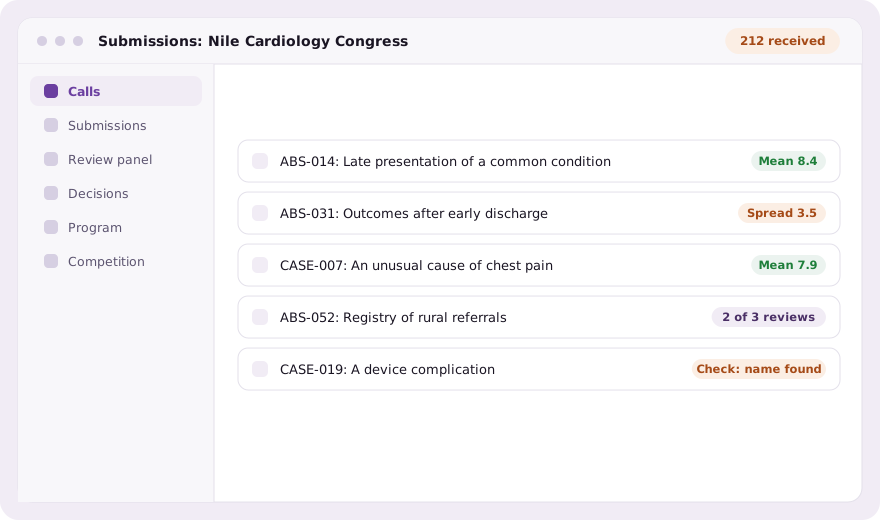
Reviewers are matched to submissions by expertise and load, starting with the submissions that are hardest to cover. Shared institutions and co-authorship are flagged as conflicts, and a conflict is never assigned to fill a gap: the plan says what it could not fill and why. Every assignment comes with a sentence a chair can read.
Decide on Tuesday, send on Thursday
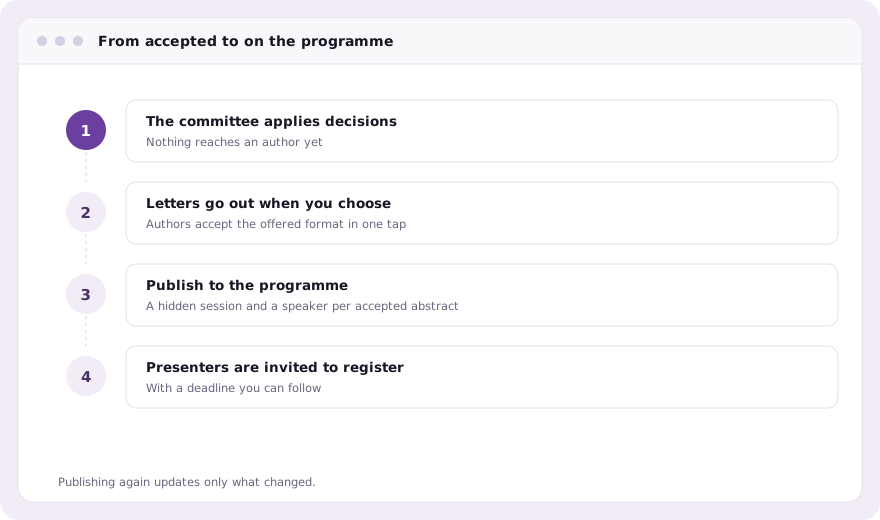
Deciding and notifying are separate steps, so a committee decides over an afternoon and sends the letters on the morning it chooses. Scores feed a proposed decision from the rubric thresholds; a blank criterion is left out rather than scored zero, and each reviewer’s scale is evened out so a harsh marker and a generous one count the same. Sending is safe to repeat: a letter that failed goes out next time, and none goes twice.
Accepted posters can open in an e-poster hall, the book of abstracts prints straight from the browser, and a judged case competition runs on the judges’ phones with one shared countdown.
Common questions
Can reviewers see who wrote a submission?
Not in double-blind review. Author names, institutions and original file names are never sent to the reviewer’s screen.
Can we run several calls at once?
Yes. Abstracts, clinical cases and award streams are separate calls in one event, each with its own form, deadline and scoring.
Do accepted abstracts appear on the programme automatically?
One press publishes every accepted and notified abstract as a hidden session with its presenting author as a speaker, ready for you to schedule.
Book a demo Thirty minutes, screen shared, in Arabic or English.