A queue at the door is a capacity problem, and you can work out the numbers the week before. Most attendees arrive in a short window before the first session, so plan for that peak instead of the day’s total, and choose a check-in method fast enough to clear it. This guide covers the arithmetic, the desk setup and what to do when the network fails.
Plan for the peak
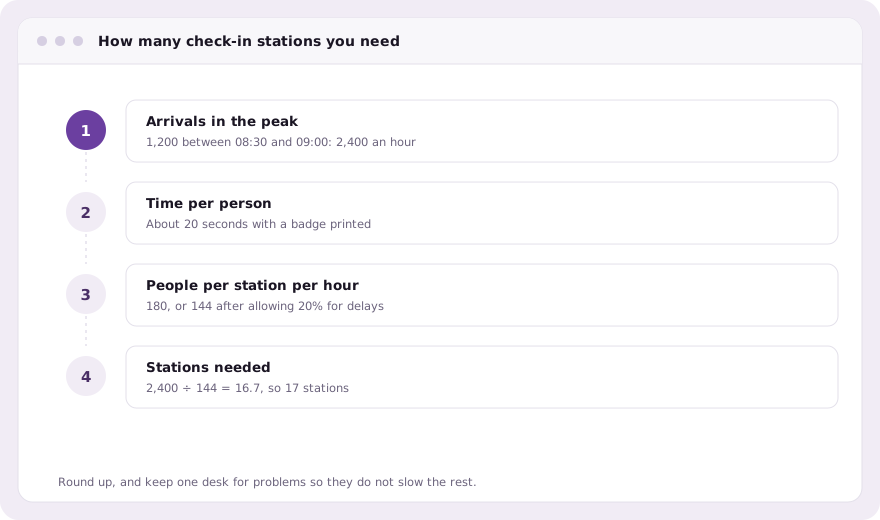
Planning guides for event check-in put most arrivals in the half hour to hour before the opening session. Take your expected turnout, assume most of it arrives in that window, and you have the rate your desks must clear. A 2,000-person conference with 1,200 people arriving between 08:30 and 09:00 has to check in 40 people a minute. On a multi-day event the peak is the first morning, and later days arrive more evenly.
Choose a method
Scanning a QR code from a phone takes a few seconds per person. Printing a badge on the spot is slower because the printer sets the pace, and searching for a name is slowest of all. Conferences usually print badges at the entrance, while exhibitions often scan visitors in with badges printed in advance. Self-service kiosks that print on scan add printers without adding staff.
Set up the desks
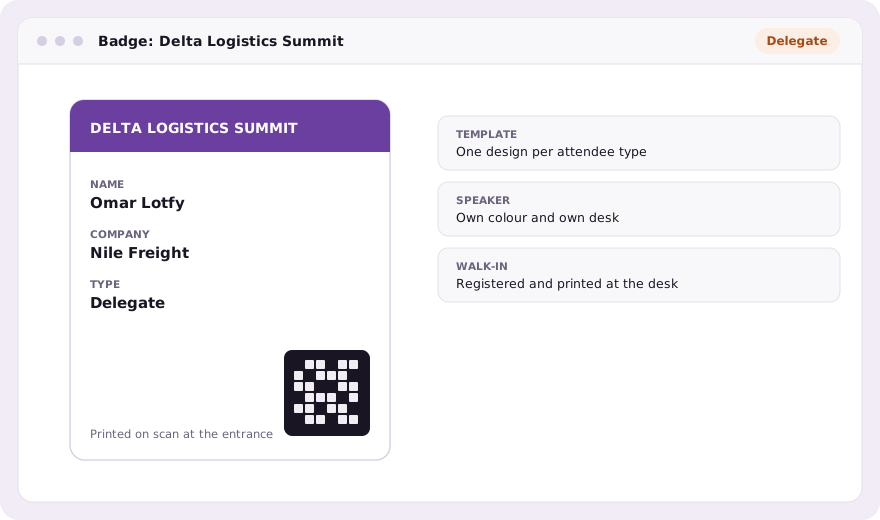
Split the queue. Pre-registered attendees go to the main line, and walk-ins, payments and problems go to a separate desk, so one lost QR code does not hold up forty people. Send QR codes the day before on WhatsApp, which most attendees already have open. Give speakers, guests of honour and exhibitors their own desk. In evenclo each attendee type prints its own badge design, and walk-ins register and pay at the desk into the same order list as online sales. Where the building allows it, put the desks inside, away from the doors, so the queue forms indoors and does not block the entrance.
When the network fails
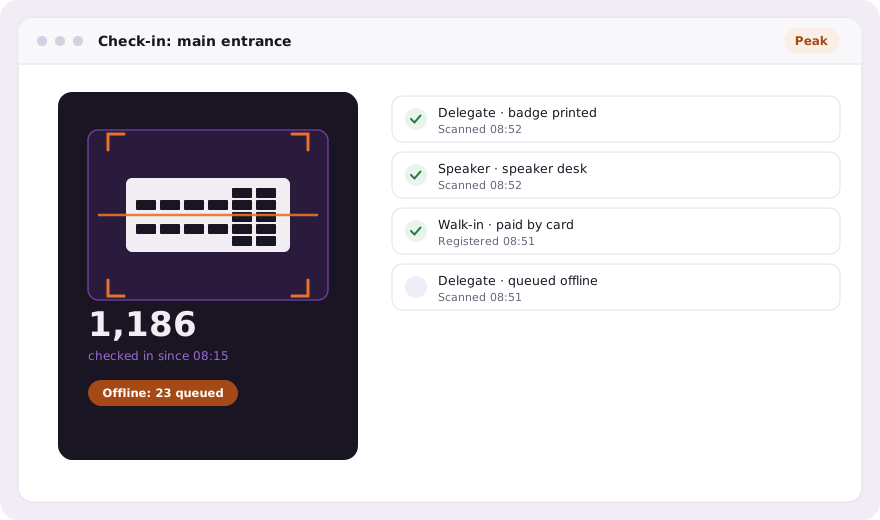
Venues and exhibition halls lose wifi and mobile data at the worst moment, when a thousand phones arrive at once. Check-in has to keep going without it. evenclo’s scanner holds scans on the device when the connection drops and syncs them when the signal returns, so the door keeps moving.
Test it the evening before
Run a real scan and a real badge print at every desk the evening before, on the venue’s network, with the staff who will be working them. Most morning failures are a printer driver, a laptop update or someone who has never seen the screen.
Common questions
How many check-in stations does an event need?
Divide peak arrivals per hour by what one station clears in an hour, allowing about 20% for delays. With badges printed on the spot that is roughly 150 people per station per hour.
Is QR check-in faster than a printed list?
Yes. A scan takes a few seconds and needs no searching, while finding a name on a list or a screen takes several times as long.
What happens to check-in if the internet goes down?
With a scanner that works offline, scans are held on the device and synced when the connection returns. Test this at the venue the day before.
Book a demo Thirty minutes, screen shared, in Arabic or English.